
You May Also Like
International Shipment Release Import in India: Process, Documents and Tips to Clear Cargo Faster
Door-to-Door Cargo from India: Process, Cost, Time and Documents (2026 Guide)
International Shipping Cost from India: Rates, Factors & Ways to Save in 2026
AMS Charges in Air Freight: What Indian Exporters Pay for US-Bound Cargo
Reliable Logistics Tracking: A Simple Guide for Indian Businesses
India to Dubai Courier Charges 2026: Complete Price Guide by Weight & Service
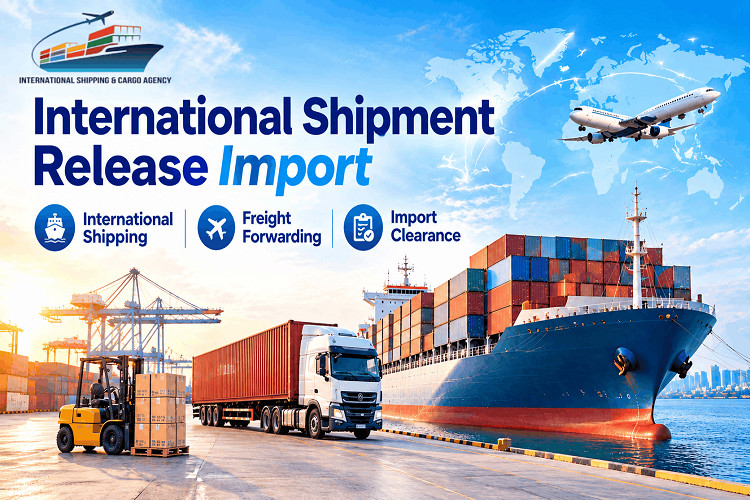
International Shipment Release Import in India: Process, Documents and Tips to Clear Cargo Faster
Your cargo is at the port or airport, and your buyer is already asking about the delivery date to the warehouse. Almost every Indian importer has encountered this situation at least once. The last stop before pickup is called international shipment release import, and until that is done, you can’t move a single carton.
Every extra day at port costs more. Storage, detention, and demurrage quietly begin to run up. Every week we work with importers and manufacturers on import release at International Shipping Cargo Agency in Delhi, and we see the same delays over and over again. This guide walks you through the entire process in plain English, so you know what to prepare for and what to expect.
Quick answer: International shipment release import means Indian Customs and the carrier (shipping line or airline) have permitted you to take imported goods out of the port, airport, or ICD. This is done after filing the Bill of Entry, payment of duty, an Out of Charge order from Customs, and a delivery order from the carrier.
What Does ‘International Shipment Release Import’ Mean?
Release just means your cargo is free to proceed. The permission is granted on both sides.
Customs ensure your goods comply with Indian import regulations and that the correct duty is paid. The carrier, through its agent or terminal, will confirm that freight and local charges are paid and that you are the correct person to receive the cargo.
Many first-time importers believe paying duty is enough. It’s not. Customs may release your cargo, but you might still be held up by a pending carrier charge or lack of the original bill of lading. The gate pass will be issued only after both approvals are obtained. This entire activity is part of the import customs clearance process in India.
Step-by-Step Process of Import Release in India
Here is how it normally works, from arrival to pickup.
- Cargo arrives, and the manifest is filed. The carrier files the Import General Manifest (IGM) with Customs. Your cargo is now on record at the port, airport, or ICD.
- The Bill of Entry is filed on ICEGATE. You or your customs broker (CHA) file the Bill of Entry online on ICEGATE. You can file it before the cargo lands, which saves time. Details like invoice value, HS code, and quantity must match your documents.
- Customs assessment. Customs checks classification, value, and duty. The risk management system decides whether your bill is cleared directly, sent for a document check, or sent for physical examination.
- Duty payment. You pay customs duty online. This usually includes basic customs duty, social welfare surcharge, and IGST, along with any other duty that applies to your product.
- Examination, if selected. An officer may open and check the goods at the terminal or CFS. Keep packing easy to access, and have someone present to help.
- Out of Charge (OOC). Once Customs is satisfied, it gives the out-of-charge order. This is the official customs release.
- Delivery order. The shipping line or airline’s agent issues the delivery order after you clear their charges. For sea cargo, you may need the original Bill of Lading or a telex release at this stage.
- Gate pass and pickup. After you pay the terminal or CFS charges, you get the gate pass and send your truck. The goods leave, and your international shipment release import cycle is complete.
Documents Required for International Shipment Release Import
Missing papers are the #1 reason for delay. Have these ready when the cargo arrives:
- Packing list and commercial invoice
- Bill of Lading (ocean) or Air Waybill (air)
- The details of GST and Importer Exporter Code (IEC)
- Entry Bill
- Import licence, NOC or certificate if your product requires one (e.g., FSSAI, BIS, WPC or a drug licence)
- Certificate of origin if claiming a duty benefit under a trade agreement
- Insurance certificate, if applicable
- KYC paperwork and an authorisation letter for your customs broker
The import clearance papers are together. these. The names, quantities, and values as per the invoice, bill of lading, and bill of entry should correspond exactly to each other. 5. A spelling difference in the consignee name can even raise a query.
Why International Shipment Release Import Gets Delayed
Here are the most common reasons we see:
- Document mismatch: The invoice, packing list, and bill of lading have different quantities, value, or consignee names.
- Wrong HS Code: Your duty is determined by classification. Mistakes in code result in questions and sometimes penalties.
- Valuation query: Where the declared price appears to be significantly lower than similar goods, Customs may request proof.
- Licence or NOC missing: Restricted or regulated goods cannot move without it.
- Delay in Original Documents: If the supplier delays in sending the original bill of lading by courier or releasing it by telex, the delivery order cannot be issued.
- Pending charges: The cargo is being held for unpaid freight, terminal handling, CFS, or airline handling dues.
- Examination queue: In busy weeks, physical checks take additional days.
In our experience, most holds are the result of small paperwork errors, not big legal problems. If you move fast, many can be fixed in a day or two.
How Long Does an International Shipment Release Import Take?
The release time of the import cargo depends on the port, the product, and how clean your papers are. As a rough idea, air cargo with the correct documents is often released within one to three working days after arrival. Sea cargo can take three to seven days, particularly if examination is required. Pending queries, missing licences, or original documents can extend this further. These are general ranges, not promises. Every shipment is different.
Charges You May Pay Before Release
The release of the goods is not a free-of-charge procedure. Please bear in mind the following costs:
- customs duty: Basic Customs Duty, Social Welfare Surcharge, IGST and any other duties applicable to your HS code,
- demurrage: a charge that a shipping line levies on you for storing a container at port for more than the free-of-charge period,
- detention: a charge that a shipping line levies on you for storing a container outside the port for more than the free-of-charge period,
- CFS charges: handling, destuffing and storage at the Container Freight Station,
- aircraft storage or ground rent: for overstay of aircraft cargo at the airport,
- customs broker and transport costs.
The free days vary depending on a shipping line and a port, so make sure to clarify the conditions with your agent by checking a delivery order. In case your warehouse is not available for receiving goods, some shipping lines offer the option to store containers at a warehouse instead of a terminal. Please be aware that storage involves additional costs and a storage period.
8 Tips for Faster International Import Release
- Ask your supplier to provide the draft documents before the shipment is made and verify them.
- Check the applicable HS code and duty rate before shipment booking.
- File the Bill of Entry in advance, which includes the customs clearance data.
- Keep your IEC, GST, and KYC documents updated.
- Discuss with your supplier about the telex release or the time for providing the original documents at the time of order placement.
- Get associated with a licensed customs broker who is well-versed with the customs procedures of your port of discharge.
- Monitor the status of the Bill of Entry regularly through the ICEGATE website and the carrier’s website on a day-to-day basis.
- Make sure that you book your truck early to avoid any delay in pickup, considering the weight and size of your cargo.
A Note on Rules and Accuracy
Customs rules, duty rates, and procedures are subject to change by way of notifications issued by the Central Board of Indirect Taxes and Customs (CBIC). It is advised to check the latest duty rates and requirements on the websites of CBIC and ICEGATE, or by checking with a licensed customs broker before you file your shipment. The information provided here is meant for guidance only and shall not be considered as legal or financial advice.
How an International Shipping Cargo Agency in Delhi Can Help
Our logistics services assist importers with Bill of Entry filing, documentation examination, duty computation, coordination with a carrier and terminal, and door-to-door delivery. If your shipment is held up, or you want to organise your next import correctly, contact us and talk to our team. A brief call before shipping can prevent a few days’ delay.
Frequently Asked Questions (FAQs)
It is the last clearance stage, when imported goods are permitted to clear the port, airport, or ICD. The customs authority gives the out-of-charge order, and the carrier issues the delivery order. The gate pass is thereafter issued, and the consignment is collected.
Either. Customs clears the consignment after assessment and duty payment. The shipping line or airline releases the goods from its side once its charges and documents are in order.
Track your Bill of Entry status on the ICEGATE website and enquire with your customs broker for the status of being out of charge. As for the delivery order, you need to follow up with the shipping line, airline, or its agent.
It is the customs order authorising the release of goods for home consumption or warehousing. The cargo cannot exit the terminal without the out-of-charge order.
No. Duty should have been paid, or a valid exemption claimed, before the customs authority issues the out-of-charge order.
Storage, demurrage, and detention charges mount up daily. Identify the cause of the release delay immediately and resolve the document or payment problem before notifying your buyer of a new delivery date.