When it comes time to search for freight from India to South Africa, the very first thing that most ask is, “What is the fastest way?” This is a reasonable question, but it is not the right place to start.
This is how we function in our international shipping and cargo agency. If you are an individual or even a company, we can help you with your Air and Sea freight from India to South Africa. Our services include air freight and sea freight services, including FCL and LCL, from start to finish.
In brief: If you are short on time, check out Air Freight from India to South Africa. If you need to transport large quantities of freight from India to South Africa, go for Sea Freight from India to South Africa.
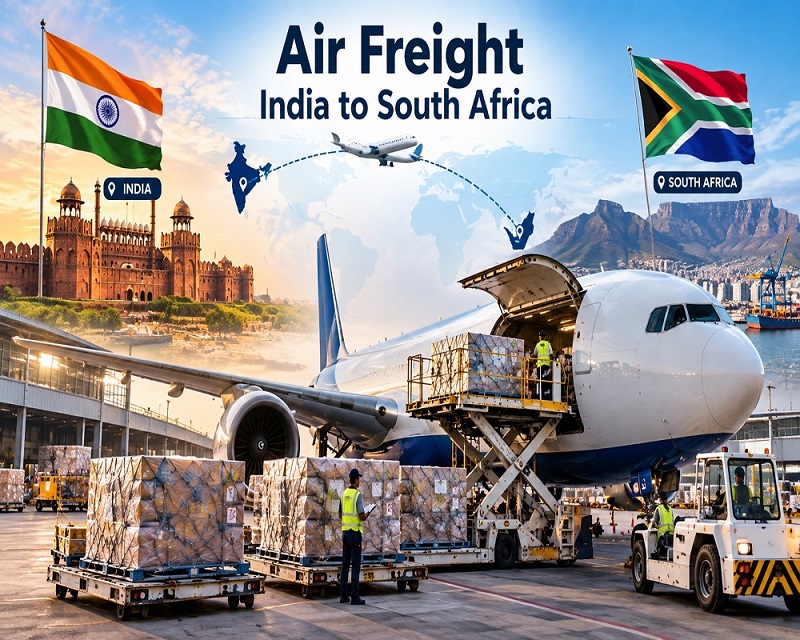
There are times when cargo cannot afford to sit idle; a replacement part is holding back production, samples have to be sent for a meeting, or the inventory is getting low. This is when the need for air freight arises.
This is how it will all happen: your cargo will be collected from India, prepared for export, the documentation handled, and your cargo flown to South Africa via international airports. Then it can be delivered to your destination address.
Air freight services are ideal for time-sensitive and valuable shipments where speed matters.
Time-sensitive shipments
Lightweight or small cargo
Commercial samples
Parts and replacements
Electronics
Valuable cargo
The one honest caveat here is that there is no fixed transit time, which varies according to your pick-up location, destination country and port in South Africa, the route taken by the airlines, and the nature of the cargo. We prefer to give you an estimate based on your cargo rather than making a blanket statement.
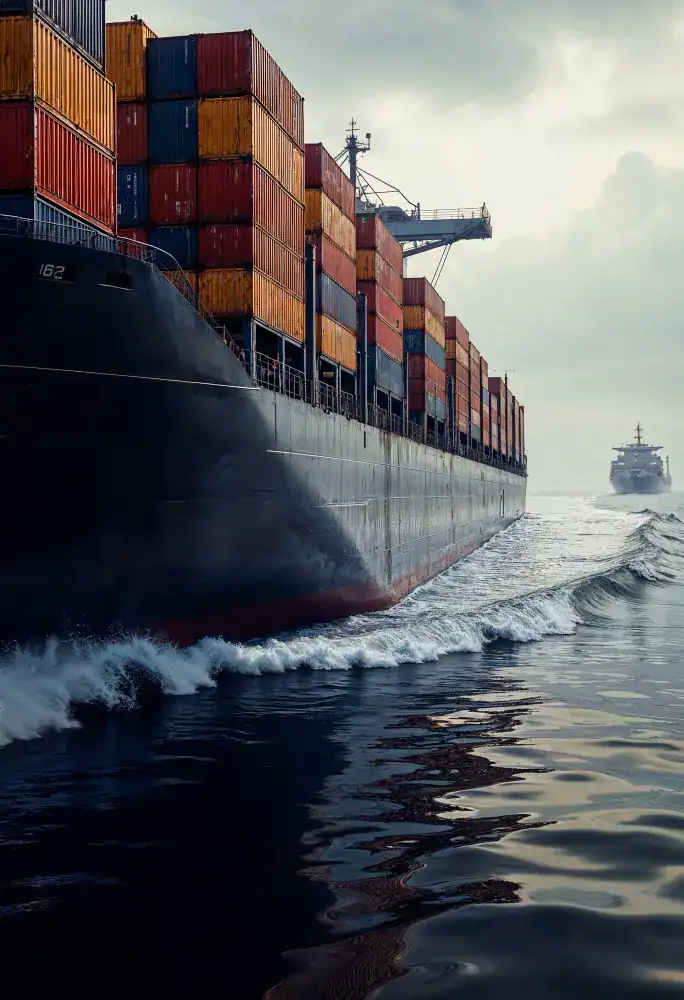
If you have a bulk of cargo to move, then sea freight might be your saving grace. This is normally the preferred method of moving machinery, furniture, industrial equipment, raw materials, retail goods, and many others.
This mode of transport will move your cargo via water, then into South Africa through seaports, before moving inland towards the destination point. This is less expensive compared to air freight, but the duration of movement will be longer.
Your cargo is bulky or heavy
The delivery period is not critical
Your aim is to cut down freight costs
You require the use of an entire container
You can move your cargo using a shared container
You are an importer who imports frequently
FCL (Full Container Load) means the container is dedicated to your cargo alone. It makes sense when you have enough goods to fill one, or when you'd simply like your shipment to have its own space. Think machinery, industrial equipment, furniture, bulk products, heavy cargo and large or regular business orders.
Standard 20-foot and 40-foot containers are the usual options, subject to carrier availability and your cargo's specifications.
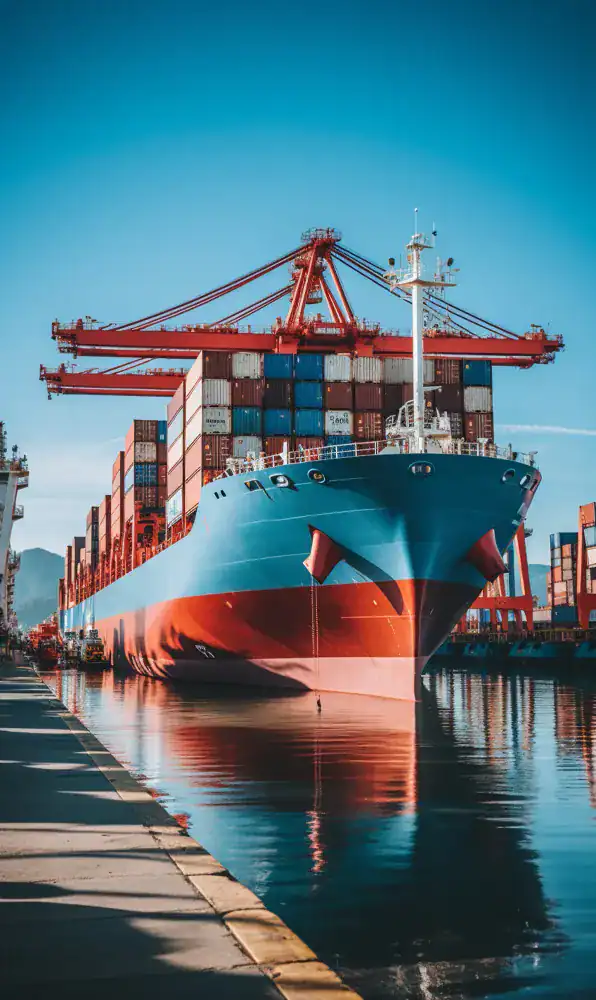
LCL (Less than Container Load) is for shipments that don't need a whole container. Your goods travel alongside other shippers' cargo, so you're not paying for space you don't use.
It works well for cartons, samples, small machinery, spare parts, small business orders and partial shipments. Whether FCL or LCL is right comes down to your cargo's volume, weight and characteristics, and which service is available on your route.
There's no one method that's best for everyone. A small urgent package and a full container of commercial goods shouldn't be planned the same way. Use this as a rough guide:
| If your cargo is... | Lean towards |
|---|---|
| Urgent, and the deadline can't move | Air freight |
| Small or lightweight | Air freight or LCL |
| Samples, urgent parts or valuable goods | Air freight |
| Large, heavy or bulk | Sea freight (FCL) |
| Machinery, furniture or commercial stock | Sea freight |
| Part of a planned, regular import | Sea freight |
| A partial load, not urgent | LCL |
In general, air is faster and costs more, while sea is slower and usually more economical for larger volumes. Air goes airport to airport, then onward by road. Sea goes port to port, then inland.
International freight forwarding involves a number of steps, and having a grasp of them will enable you to be well-prepared and ready to supply the necessary information on time. The following are the steps involved.
Your goods are collected from your premises in India. For this, you will provide us with information about the collection address, nature of cargo, number of packages, weight, and dimensions.
Your goods will be evaluated to determine whether it is appropriate to ship them by air or sea, or FCL or LCL. The type of cargo and requirements for handling may also affect your option of shipping mode.
Documents will be provided, and your shipment will undergo export procedures in India.
Your cargo will be transported by air or sea, depending on your choice.
Once the shipment reaches South Africa, it goes through the import and customs process. South African Customs expects importers to declare their goods and meet the applicable requirements. Depending on the shipment, Customs may review documents, inspect the goods, assess duties and taxes, or ask for more information. Some products also need permits or approvals. You can read the official SARS guidance on imports for more detail.
After clearance, your cargo moves from the airport or port to its final address by road or another suitable inland service.
However, even perfect logistics will not guarantee the smoothness of the process since there may be problems during the customs clearance procedure. Inadequate or inaccurate paperwork is the most common reason why shipments are detained.
As stated by SARS, the process of clearance may include a verification of the information provided in the declaration form against other paperwork such as invoices, bills of lading, certificates of origin, permits, etc. Thus, the more accurate the information you provide in advance, the easier the process will be.
Commercial invoice
Packing list
Air waybill (air cargo) or bill of lading (sea cargo)
Certificate of origin, where applicable
Import or export permits, where required
Product-specific certificates, where applicable
Other customs or regulatory documents
Exactly what you need depends on your goods, the transaction and current regulations. Certain products require additional permits or certificates, and SARS has been updating its requirements around electronic invoice data and goods declarations, so it's worth checking the current SARS customs guidance or letting us help you with it.
South Africa is a big country, and where your cargo ends up changes the plan. A shipment that arrives at an airport or seaport will often still need to travel inland to reach your customer.
We regularly plan deliveries to:

For example, cargo bound for Johannesburg will need road transport after it arrives, while a coastal destination can have very different delivery needs. That's why your quote should cover both the international freight and the final delivery location, not just one of them.
Simply requesting "the fastest shipping" isn't enough to go on. In order to make an accurate comparison of air freight vs. sea freight, it's necessary that we have more information about your shipping requirements. Please provide us with the following information:
Based on this information, we will be able to make an accurate comparison between air freight and sea freight. Urgent cargo usually goes by air. Larger cargoes where cost is a bigger issue benefit more from sea freight.
Because we plan according to your goods, not a fixed format. Each shipment is unique and treated accordingly.
Whether it’s just one single business item or several, we will guide you through all the possibilities and get you a practical compromise of time and money.
Are you ready to ship? Please give us all your shipping information, and we will assist you in determining if Air Freight from India to South Africa or Sea Freight from India to South Africa would be better suited for your shipment. You can provide your pick-up and delivery locations, type of cargo, dimensions, weight, and number of packages.
Fast air cargo, economical sea freight, full container load (FCL), less than container load (LCL), customs clearance, and inland transport – the perfect plan begins with knowing your shipment.
Get a Freight QuoteFor your shipping needs from India to South Africa, please contact International Shipping Cargo Agency.
Air freight is generally quicker than sea freight when it comes to time-sensitive freight services. This will depend on the origin point, destination point, route chosen, customs, and the nature of the products being shipped.
It depends on your origin city in India, your destination in South Africa, flight routes, customs clearance processes, and the type of cargo you have. We shall be able to give you the proper time once we review your cargo.
Generally yes. Air freight is costlier but faster, while sea freight is relatively cheaper but takes longer. It depends on weight, dimensions, and destination.
Yes. Smaller consignments may be transported using air freight or Less than Container Load sea freight.
Typically a commercial invoice, a packing list, and an air waybill or bill of lading, plus any supporting documents your shipment calls for. Some goods need permits or product-specific certificates, and South African Customs may ask for more documents during clearance.
Yes, we can coordinate customs clearance as part of your shipment. The exact requirements depend on your goods and South African regulations.
The delivery of the goods door-to-door can be done according to the shipment, the destination, type of cargo, and services provided.
Please send us the details of pickup and delivery addresses, cargo description, number of cartons, their weight and dimensions, along with your preferred shipment method – it will be sufficient for us to offer you the best solution.
Yes. Businesses can arrange international freight for commercial shipments, subject to export, import, customs, and product-specific requirements.