In the rapidly changing world of business, people need quick and reliable transportation services that will help them transport their goods from one country to another. This could include medicines, electronics, clothing, car parts, or any other perishable goods. The best means of transportation for all of these commodities is none other than air cargo shipping.
Understanding Air Cargo Processes: A Step by Step Guide To Shipping assists the exporter, importer, or new shipper in making decisions without encountering unnecessary delays and problems in shipping. Every process goes through a systematic procedure starting from booking and packing up to customs clearance, aircraft loading, and delivery.
With International Cargo Shipping, you can rest assured of having your international cargo shipping needs met with ease through our dependable services. We are able to do so because of our team of logistics experts and global shipping network.
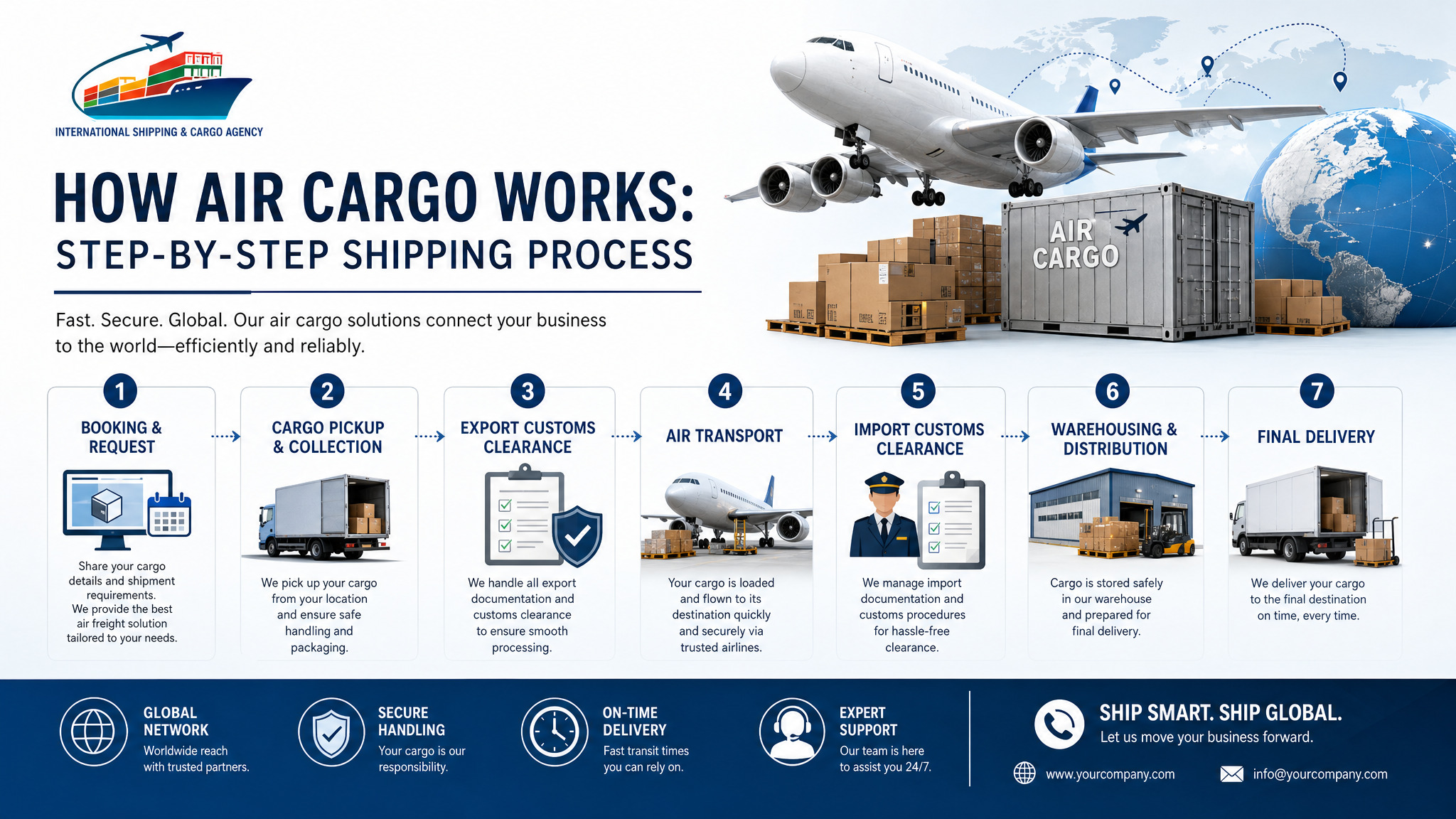
The guide gives a detailed explanation of How Air Cargo Works: Step-by-Step Shipping Process using simple terms to ensure that you fully comprehend each step in international air cargo transport.
Cargo by air means shipment of cargo by the use of aircraft from one point to another. Cargo is different from luggage since it undergoes packing, documentation, screening, and handling in a special section of the airport terminal for loading on the aircraft.
Air cargo is usually preferred by businesses if the shipment is urgent, high-value, delicate, or requires rapid international transit. Despite the higher cost of air transport compared to ocean transport, its advantages may outweigh the cost.
Some of the items commonly shipped via air freight are:
Some of the reasons why many businesses opt for air cargo are:
In contrast to sea and land cargo transportation, air cargo delivery takes much less time than the other modes of transportation. While international shipments might take weeks via sea, they might only take days via air.
Unlike the transport by sea or road, the time taken by air freight is much lower. Shipments that might require weeks to reach their destination via sea might take just a few days by air.
Commercial flights link many airports around the world, thus making international cargo transport available to almost all commercial destinations.
Airplanes follow a set schedule of flights, giving companies more accuracy in planning their inventory and deliveries.
There is a proper procedure that each package goes through. Knowledge about this will help companies ship their goods properly.
The shipper contacts a freight forwarder such as International Cargo Shipping.
In this phase, logistics specialists gather significant details regarding the cargo such as:
Using this data, the best choice of airline, flying schedule, and routing is made.
Good planning reduces shipping costs and ensures timely delivery.
The importance of proper packaging is significant in safeguarding products during international transport.
Different items require different types of packaging. Delicate items will require extra padding, while industrial machinery will require tough wooden boxes or pallets.
Proper professional packaging must entail:
Proper packaging will help avoid damage to goods and comply with airline safety regulations.
The documentation stage is one of the most crucial stages in the air cargo transportation process.
Incomplete or erroneous documentation can lead to delay or rejection by the customs authority.
Some of the common shipping documents are:
The Air Waybill (AWB) is considered to be the most important document of shipping. It contains information about shipment, route data, consignee information, and tracking information during the whole transportation process.
After documentation is done, the cargo is collected from the warehouse, factory or premises of the shipper.
Professional logistics services providers have secure transportation vehicles which transport the consignment safely to the airport cargo terminal.
Prior to being delivered to the airport, the freight must be inspected for the following:
All discrepancies are sorted out before the freight is brought into the airport handling process.
All cargoes intended for transport in an aircraft must first undergo mandatory security checks.
The use of technology by airport officials helps in ensuring that all cargo adheres to international aviation standards.
After this process is successfully completed, the consignment will be allowed to undergo the process of exporting and boarding the aircraft.
It is through such rigorous processes that air freight becomes one of the safest means of transport for international cargo.
Following successful clearance of the shipment at security check point, it proceeds to the process of export customs clearance. This is an important aspect of the How Air Cargo Works: Step-by-Step Shipping Process as this is the point where the shipment is cleared from the country by the custom officials.
Customs agents inspect the shipping papers to verify the valuation of the cargo, and make sure that there are no prohibited or restricted articles in the consignment. Provided everything is okay with the papers, the cargo will be shipped out without any delay.
Dealing with a reputable freight forwarding firm such as International Cargo Shipping assists firms in avoiding documentation issues and also allows for hassle-free customs clearance.
Following export clearance, the cargo is moved to the cargo terminal at the airport, where cargo specialists perform the necessary actions for sending it with the next available flight
There are various activities that occur during this phase:
.
Today’s modern logistic warehouses for air cargo have highly sophisticated warehouse management systems that enhance efficiency, decrease the handling period, and increase security against theft of the consignment.
Products such as drugs, vaccines, flowers, fish, and other items that are sensitive to changes in temperature have to be placed in temperature-regulated zones for preservation purposes.
When the plane is prepared for its journey, it’s time for the cargo handlers to load the shipments following the safety guidelines set by the airlines.
Cargo can be put into special containers called Unit Load Devices (ULDs). They are specially made for carrying cargo on airplanes.
The following considerations are made by airline workers before loading:
Right loading will ensure safe flight and secure the goods during transportation.
Once loading is completed, the aircraft takes off to the destination airport.
This phase constitutes the most rapid segment of the whole air cargo shipment process. As compared to sea cargo transport that takes up to weeks, international air freight transportation normally delivers the consignments within just a few days, depending on the destination.
Airlines keep track of flights and also communicate with airport officials during cargo transport to guarantee safety.
Several logistics firms also provide tracking of shipments in real time.
Once the flight lands, the cargo undergoes the customs procedures of the destination country.
The import customs officers check for:
In case all documents comply with the importation rules of the destination country, then the customs release the shipment to be distributed locally.
Incorrect documentation is one of the reasons why shipments are delayed. That is why companies need to ensure that their documentation is accurate prior to shipping.
After the process of customs clearance has been completed, the goods will be delivered to their destination.
This will depend on the type of shipment chosen for delivery that may involve:
Professional logistics firms arrange for local delivery services so that the freight is safely delivered to the consignee’s warehouse, office, retail outlet, or place of residence.
This marks the completion of the How Air Cargo Works: Step by Step Shipping Process.
Good documentation is critical for successful global shipping operations. Failure to have proper documentation can cause the shipment to be delayed, face additional charges, or even get rejected by customs.
These include:
The Air Waybill is the official document that acts as the transportation documentation from the airline company or freight forwarder. It includes the following: information on the shipment, routing, sender, receiver, and tracking number.
This document helps the customs authority get information about the products being transported, along with the amount, price, and country of origin.
Packing List includes all the details regarding the contents of each parcel, along with its weight and dimensions.
Other nations insist that exporters file an export declaration prior to shipment from the country.
Some products like medical supplies, chemicals, and foodstuffs require import licenses based on the laws of the destination nation.
The one main benefit of air cargo transportation is cargo visibility.
Freight forwarders usually offer their customers tracking services to monitor the cargo from pick up till delivery.
The tracking details usually include:
Real-time tracking increases transparency and allows businesses to plan their inventories better.
The reasons why companies all over the globe still prefer to opt for international air cargo service are multiple.
Air transport is best suited to those shipments that need to be delivered quickly.
Tight security measures at airports help avoid any chances of stealing or tampering.
Airlines link commercial centers of the globe, making international trade more efficient.
Fast delivery enables businesses to carry smaller stocks and improve their financial situation.
The airlines operate on fixed schedules, making it easier for businesses to plan their production and stock, as well as customer delivery plans.
With International Cargo Shipping, the professional logistics team will handle all stages of the shipping process including booking, documentation, custom clearance, and delivery to ensure that the cargo gets delivered safely and in time.
Despite the efficiency of the air cargo transport service, companies could sometimes experience some difficulties. Knowledge of these difficulties beforehand will assist shippers in planning better and avoiding possible complications.
Incomplete shipping information, failure to attach an invoice, wrong packing list, and lack of correct documentation for clearing customs may lead to delays. It is therefore necessary that all documentation be correct prior to sending goods in order to avoid shipment delays.
All countries have specific laws regarding imports and exports. Not abiding by these laws may cause further inspection and penalties or delays in delivery. The cooperation with an experienced logistics company ensures that companies comply with the international trading laws.
Weather conditions, traffic at the airport, or unforeseen problems might have an impact on flights. However, despite the airlines’ efforts to ensure prompt departures of flights, some delays cannot be avoided.
Some products such as chemical products, lithium batteries, inflammable items, or hazardous goods need to have certain packaging, labels, and documents to meet international aviation security requirements.
Cargo air transportation services experience high demands at festive periods and other important shopping days around the world. High demand can have an effect on available cargo space as well as prices. It is important to make shipping arrangements in advance.
Conformity with industry standards will enhance shipment efficiency, prevent delays, and promote safety in transport.
Good packaging safeguards the shipment from any damage due to shock, vibration, and environmental effects while on transit. Any fragile cargo should always be accompanied by proper packaging and labeling instructions.
Double-check all shipping documents before sending out the shipment. Proper documentation will expedite the clearance process at the customs point and minimize the chance of rejection of the shipment.
Advance booking ensures good availability of flights, lower costs on freight, and increased flexibility in case of an emergency shipment.
Check the import laws in the destination country before you ship internationally, including any prohibited products, duty obligations, and certification of products.
The professionals involved in logistics make the whole process of How Air Cargo Works: Step by Step shipping process very simple.
International Cargo Shipping offers a professional logistics team that will help your business transport cargo efficiently in international markets.
The choice of transportation mode is based on the urgency of the shipment and its cost.
| Air Cargo | Sea Freight |
|---|---|
| Fast international delivery | Longer transit time |
| Ideal for urgent shipments | Best for large-volume cargo |
| Higher transportation cost | More economical for bulk goods |
| Excellent shipment security | Suitable for heavy industrial cargo |
| Lower inventory holding costs | Cost-effective for non-urgent shipments |
It is advisable for businesses transporting high-value cargo, medical equipment, electronics, fashion merchandise, and emergency cargo to use air transport whereas heavy machinery and bulk goods can be transported via sea routes.
Selecting the proper logistics company can be just as crucial as selecting the proper mode of transportation.
At International Cargo Shipping, we specialize in offering reliable international logistics services that cater to the requirements of businesses of all sizes.
Our range of services includes:
Our skilled logistics experts organize each step of the shipping process to guarantee your shipment arrives safe, efficient, and on time.
No matter what kind of goods you are shipping, commercial, industrial, personal effects, or valuable items, we will make sure that you get the best logistical service possible.
How the Air Cargo System Works: Complete Guide to Step-by-Step Shipment is beneficial for businesspeople in making well-informed decisions regarding logistics. Each step from shipment scheduling, packaging, customs clearance, airport processing, air transportation to delivery plays an equally important part in transporting the goods from point A to B.
With the constant growth in international trade, air cargo logistics is still one of the best methods of transporting goods, especially where time and safety matter a great deal. Companies that ensure correct documentation, compliance with international transport rules, and work together with a good freight forwarding company will be assured of better results.
If you need reliable services in international air cargo transport, you have come to the right place in International Cargo Shipping. Our skilled professionals will offer you full freight logistics services, customs assistance, cargo security services, and international deliveries to ensure your safe shipping across the world.
Cargo air transport is the movement of goods by use of aircraft either within the country or overseas. This cargo may include express cargo, pharmaceuticals, electronics, and other cargo forms.
The significance of an air cargo facility cannot be underestimated when it comes to international cargo shipping, where the process involves checking documentation, cargo security checks, cargo handling, customs clearance, and coordination with the airlines.
Examples of these documents include the air waybill (AWB), commercial invoice, packing list, export documentation, import license (if needed), and any other certificates that the destination country might require.
Absolutely. Air cargo terminals maintain high levels of security, which include screening, controlled handling, and tracking of shipment, and this makes air cargo transport a secure method of transporting valuable and sensitive shipments.
Yes. The majority of freight forwarders offer tracking services for shipments through AWB numbers enabling clients to track their cargo from pick up to final destination.
Yes. Most freight forwarders provide shipment tracking service through AWB numbers allowing their customers to track their consignment from pickup till delivery.