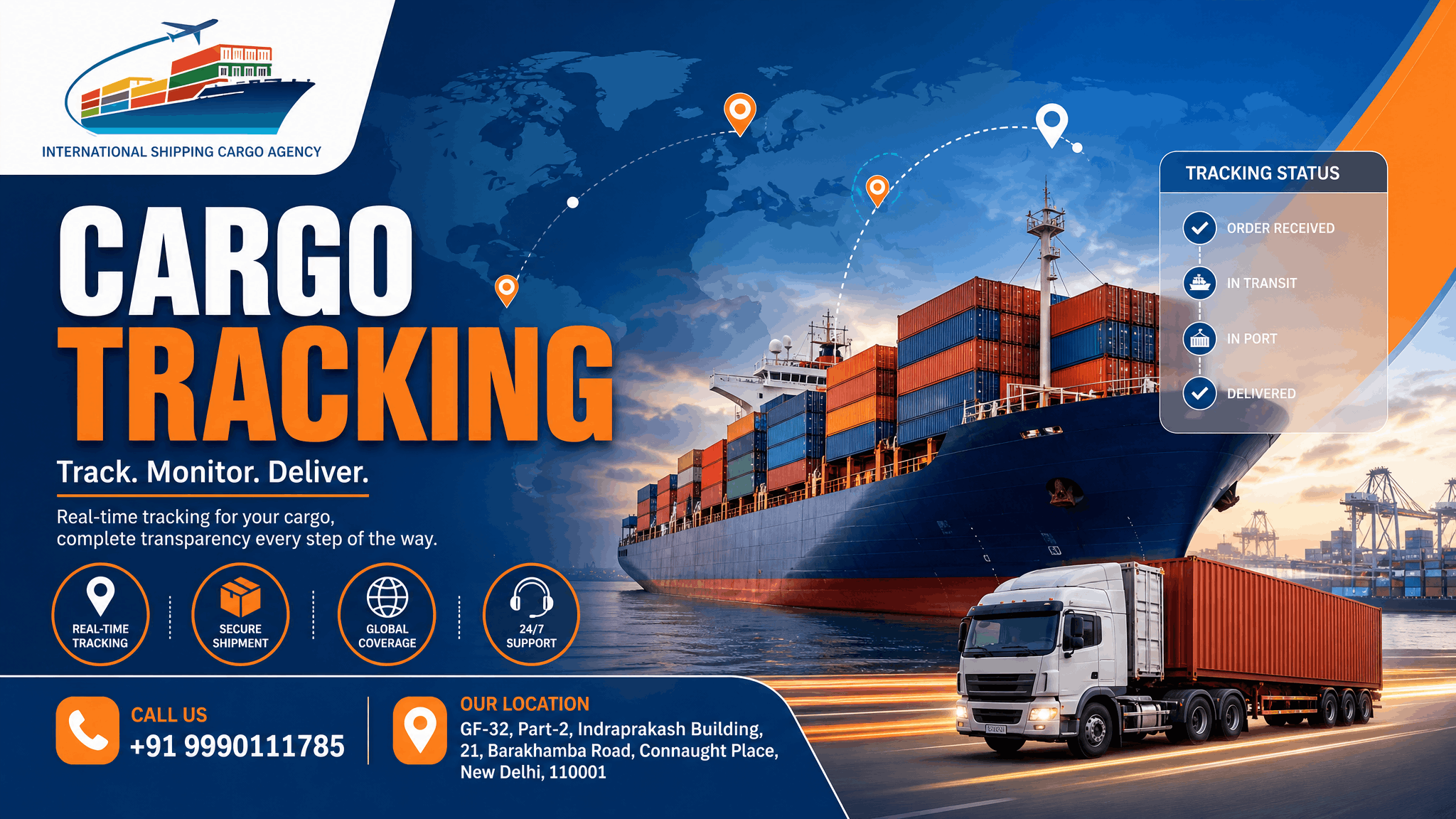
Getting information on an international shipment isn’t the hassle it used to be. Sending personal goods, cargo for work, or anything else internationally can be stressful, but cargo tracking takes the guesswork out of your shipment’s location. With modern cargo tracking systems, users can access stage-of-journey shipment updates.
Although dispatching a shipment can be the easy part, knowing when or if it arrives at the destination is often stressful. Tracking systems provide updates and improve efficiency for more than just your shipment. Systems can improve a business’s ability to report an arrival estimate, quicken the response to unexpected shipment hurdles, and aid inventory management.
Knowing the basics of cargo tracking and terms used in the profession is really all you need to monitor your shipment. This guide breaks those elements of cargo tracking down for the first-time international shipper.
Table of Contents
‘Cargo tracking‘ refers to keeping watch on shipped goods during transport from sender to receiver. A shipment contains a unique tracking or reference number. With this number, shipment status and location can be checked.
Modern logistics companies use digital systems to record shipment updates as each new check-in is completed. These updates will tell customers the status of shipment pickup, transit, customs, and delivery.
Sending requests to the shipping company for information updates is no longer necessary. Shipment information can be checked via the tracking portal with the shipment’s tracking number.
Tracking improves supply chain planning and helps to keep customers happy for companies that participate in international business.
There are multiple ways to transport goods internationally. They could be taken by road, air, or shipping before they are delivered locally. It may be difficult to understand where your shipment is if there is no way to track it.
Here are some advantages of cargo tracking.
Normally, your shipment could be anywhere for an unknown length of time. Cargo tracking allows the customer to know where their shipment is.
Knowing the shipment is moving is a great help when the shipment is needed urgently.
Arriving shipments allow businesses to restock, so businesses can plan a shipment’s arrival and schedule their restock.
Problems can be corrected before they become detrimental when you understand what delays your shipment.
Tracking updates help make your company more reliable and transparent.
Booking is the first step to tracking a shipment.
The steps are usually like this…
The shipment is booked, and the shipment record is created. A tracking number is then assigned.
Cargo is picked up, and the event is recorded in the tracking system.
Status Shown:
Cargo Picked Up
The cargo is processed, checked, and labelled. The shipment is then export-ready.
Status Shown:
Warehouse Processing Complete
For international shipments, customs verifies the necessary documents for verification.
Status Shown:
Customs Verification in Progress
Customs Cleared
Cargo is in transit. Tracking updates show the following:
Departed Origin
Arrived at Transit Location
In Transit
The shipment has arrived at the destination country. Shipment is processed through customs and is ready for local delivery.
Status Shown:
Arrived at Destination
Clear Customs
Customs has cleared. The shipment is transferred to the local delivery team and is delivered to the target recipient.
Status Shown:
Out for Delivery
Delivery Complete
Technologies used for shipment tracking differ by shipping company. This variation depends on the logistics network, shipping mode, and destination.
This is the most classic and commonly used method for shipment tracking.
Once customers place a shipment, they are given a tracking number. Customers can access new updates for their shipment by entering this number on the company’s website.
This method is straightforward, dependable, and is popularly used for domestic and international shipments.
Air shipments use the Air Waybill (AWB) number for tracking.
The AWB allows customers to view shipment information and track the movement of cargo for the AWB’s related shipments from the departure and destination airports.
Tracking air cargo is quicker due to the scanning of cargo at multiple checkpoints along an airport’s cargo transit.
The Bill of Lading (BL) is commonly used to track sea freight shipments.
The BL acts as a shipment receipt and transport contract.
Customers can view the movement of cargo containers, the departure of vessels, and the arrival of vessels by the BL’s related shipments.
Many logistics companies use GPS technology for local transport.
Customers can view the location of a shipment in real time during both the shipment’s pickup and final delivery.
Container tracking is mainly used for the tracking of cargo in sea freight shipments. Each shipping container is assigned a unique number. Customers can track the movement of a shipping container by its unique number.
This is important for any business going global with frequent large shipments.
Every package has a special identification number. This number is used by the shipping company to track each package. With the tracking number, the customer does not have to reach out and ask the shipping company for updates.
The number is usually sent in an email or text or printed on the shipping receipt after the shipment is booked.
Make sure you keep this number until your shipment is delivered.
Understanding shipment statuses helps you know exactly where your cargo is during its journey.
| Shipment Status | What It Means |
| Shipment Booked | Your booking has been confirmed. |
| Picked Up | The cargo has been collected from the sender. |
| Received at Warehouse | The shipment has reached the warehouse for inspection and sorting. |
| Processing | Labels, documents, and shipment details are being verified. |
| Customs Clearance in Progress | Customs authorities are checking the shipment and documents. |
| Customs Cleared | The shipment has successfully cleared customs. |
| In Transit | The cargo is moving towards its destination. |
| Arrived at Transit Hub | The shipment has reached an intermediate airport, port, or logistics hub. |
| Arrived at Destination | The cargo has reached the destination country. |
| Out for Delivery | The shipment is with the local delivery team. |
| Delivered | The shipment has been successfully delivered to the receiver. |
Knowing these updates helps you understand whether your shipment is moving normally or requires attention.
If cargo tracking shows no status change, this may be seen as a cause for concern. However, tracking statuses sometimes remain unchanged for brief periods without delays in the shipment.
Tracking may remain unchanged for the following reasons:
International shipments are often held at customs. During these periods, customs officials may verify documents submitted to customs and inspect the cargo themselves.
Container shipments may remain in the status “In Transit” for several days. Since vessels travel the ocean, status updates may not be available until the vessel arrives at one of the major ports.
Weather conditions and operational changes to a vessel’s schedule may cause a shipment to arrive later than expected.
Some customs control checkpoints may be closed for public or nonworking days.
Tracking may not be up-to-date after the cargo has moved. Display status usually gets resolved within hours.
There are some easy ways to keep track of shipments you can rely on more.
It’s important to hold on to your tracking number until after your delivery is complete.
You can only track your shipment accurately on the cargo company’s official tracking site.
The shipment will not arrive if the sender/receiver details are incorrect.
International shipments are held up by customs, so tracking statuses will be stuck there for a while.
If your shipment hasn’t moved in a few days longer than expected, you should call your logistics company and give them your tracking number.
We’ve all been there checking our packages multiple times, stressing about delays. This article is going to help you make sense of some of the most common shipment updates to avoid causing yourself unneeded stress.
The best thing you can do is be patient and understand how the shipping process works.
At Cargo Agency in Delhi, our customers expect visibility for their shipments.
This is how we help our clients:
Shipping internationally can be complicated, but we’re here to help you. Our main goal is to ship your items in a safe and reliable manner, so you know what is happening with your items the whole way from pickup to delivery.
A good tracking system for your cargo makes international shipping more straightforward and easy to manage. Updates of the process every step of the way from pickup and customs to the final delivery keep the customers notified of the shipment’s progress.
Knowing the status of a shipment helps you make better business plans with less frustration. It’s also beneficial to know the status of your personal items to receive them with less stress.
All of this is made easier by choosing a more experienced logistics partner. A trusted cargo company does this all with the safety of shipment in mind.
Going with air or sea freight to ship goods internationally?
An international shipping cargo agency in Delhi gives full service custom clearance options. Our services range from air cargo delivery to door-to-door delivery.
Contact our team to get a free quote. Enjoy shipping with our reliable air and sea cargo options.
Cargo Tracking is the ability to watch a shipment during the entire process by either a unique tracking number or shipping reference.
To track your shipment, enter the tracking number, Air Waybill, Bill of Lading, or Container number in the tracking section of the cargo company’s website.
This most likely means the shipment is being moved from one location to the next. There may be few tracking updates if moving via Sea freight, or if there is a lengthy Customs or transportation delay.
You should wait 24 to 48 hours. Changes may just be taking longer. If there are no changes after the shipment is expected to arrive, contact the cargo service.
AWB tracking is used for air freight and BL tracking is used for sea freight. Both are used to track international cargo.
Some shipments that are local deliveries and use freight vehicles equipped with GPS are close to being real time. Most international shipments will only show updates when they reach the major hubs like a warehouse, airport, port, or customs.