
You May Also Like
India to Dubai Courier Charges 2026: Complete Price Guide by Weight & Service
How to Ship Goods from India to Singapore: Step-by-Step Guide
List of International Courier Services from India to USA, UK, Canada & More
Shipping Ports in India: Complete Guide to Major Ports in 2026
Professional Courier Tracking by AWB Number: Step-by-Step Guide
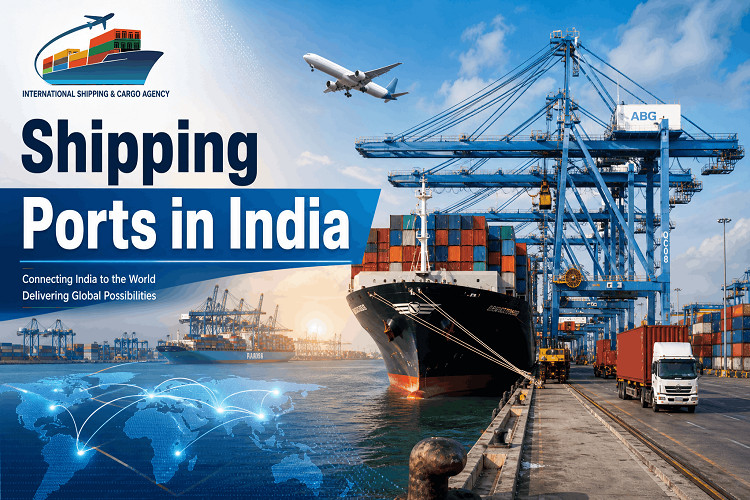
Shipping Ports in India: Complete Guide to Major Ports in 2026
With a long coastline and an active maritime trade route, India is connected to trading regions of Asia, Europe, the Middle East, Africa, and other parts of the world. All stakeholders in the supply chain, including exporters, importers, manufacturers, traders, and logistics service providers, are impacted by the choice of port for shipping.
This article provides information about the major shipping ports of India for 2026, including the location of the ports, the types of cargo handled by the ports, and the role of the ports in international trade.
What Are Shipping Ports in India?
Shipping ports are where goods are transferred between land and sea transport. Goods shipped from another country are offloaded at a port and then transported by road or rail to their final destination. Goods shipped from India are brought to a port, processed, and loaded onto a ship to be transported to another country.
There are 12 major ports in India overseen by the Government of India and numerous non-major ports overseen by state governments. The Ministry of Ports, Shipping and Waterways considers these ports as key ports for India’s maritime trade.
Major Shipping Ports in India in 2026
The 12 major ports are located along India’s eastern and western coasts. Each port has different infrastructure, cargo-handling capabilities, connectivity, and commercial importance.
Major Port | Location | Common Cargo / Role |
Deendayal Port | Kandla, Gujarat | Containers, crude oil, dry cargo, bulk cargo |
Mumbai Port | Mumbai, Maharashtra | Liquid bulk, break bulk, general cargo |
Jawaharlal Nehru Port | Nhava Sheva, Maharashtra | Containerised cargo and international trade |
Mormugao Port | Goa | Iron ore, coal, general cargo |
New Mangalore Port | Karnataka | Petroleum products, coal, fertilisers, containers |
Cochin Port | Kerala | Containers, petroleum products, general cargo |
V.O. Chidambaranar Port | Tamil Nadu | Containers, coal, bulk and general cargo |
Chennai Port | Tamil Nadu | Containers, automobiles, general cargo |
Kamarajar Port | Tamil Nadu | Coal, iron ore and bulk cargo |
Visakhapatnam Port | Andhra Pradesh | Iron ore, coal, petroleum and bulk cargo |
Paradip Port | Odisha | Coal, iron ore, crude oil and bulk cargo |
Syama Prasad Mookerjee Port | Kolkata, West Bengal | Containers, bulk and general cargo |
The current government list confirms these 12 major ports, including Kamarajar, which is a wholly owned subsidiary of the Chennai Port Authority.
1. Deendayal Port, Gujarat
Deendayal Port is located at Kandla in Gujarat and is a key port on India’s west coast. Being in this location means it can support trade throughout northern and western India.
It has the infrastructure to handle liquid and dry bulk cargo as well as containers and other cargo. With access to the Industrial and commercial areas, it is a good choice for export and import tasks.
2. Jawaharlal Nehru Port, Maharashtra
Jawaharlal Nehru Port (JNPT), otherwise known as Nhava Sheva, is one of the major container gateways of India.
Businesses reliant on containerised international cargo have JNPT’s presence next to Mumbai and its developed road and rail connectivity as a major advantage when choosing a port. This makes JNPT a preferred port for traders serving the western and central parts of the country.
3. Mumbai Port, Maharashtra
Mumbai Port is an important historic seaport of India. It still processes different kinds of cargo and helps to transport goods via the Mumbai area.
Being close to a major business centre makes it an important part of regional logistics and trade.
4. Mormugao Port, Goa
Mormugao Port, in Goa, has been known to handle bulk cargo, specifically iron ore. However, it does have the capability to handle other types of cargo.
The Ministry of Ports, Shipping and Waterways reports that in FY 2025-26, Mormugao Port had a busy year moving around 21.01 million metric tonnes of cargo, showing a significant increase from previous years.
5. New Mangalore Port, Karnataka
The Mangalore Port caters to Karnataka and the surrounding areas. It services petroleum, coal, fertiliser, containers, and other kinds of cargo.
Being on the western coast of India allows it to facilitate trade for the industries in southern and western India.
6. Cochin Port, Kerala
Cochin Port is a major maritime channel in Kerala for transporting containers, petroleum products, bulk cargo, and general cargo.
It also benefits from the commercial activities in Kerala and has direct access to international shipping routes in the Indian Ocean.
7. Chennai Port, Tamil Nadu
Chennai Port is a significant eastern coast port of India for the transportation of containers, automobiles, general cargo, and other goods.
Tamil Nadu businesses and the industrial regions adjacent to it depend on this port for their international trade.
8. Kamarajar Port, Tamil Nadu
Kamarajar Port, formerly Ennore Port, is north of Chennai. It has developed as an important port for bulk cargo, especially for coal and other industrial commodities.
It complements the maritime infrastructure around the Chennai region.
9. V.O. Chidambaranar Port, Tamil Nadu
V.O. Chidambaranar Port, located at Thoothukudi, services the international and coastal cargo movements for all of southern Tamil Nadu.
The port has the capability to handle bulk cargo and containers and is located to facilitate trade along the southern region of the country.
10. Visakhapatnam Port, Andhra Pradesh
Visakhapatnam Port is a critical port on the east coast of India with connections to industries of coal, minerals, iron ore, petroleum products, and other bulk freight.
By virtue of its location, it is a natural shipping outlet for the industries of eastern and central India.
11. Paradip Port, Odisha
Paradip Port is a significant maritime link in the trade of bulk cargo along the eastern coast of India. It predominantly handles coal, crude oil, iron ore, and other bulk cargo.
It serves the industries of Odisha and the adjacent mineral-bearing regions quite significantly.
12. Syama Prasad Mookerjee Port, West Bengal
Syama Prasad Mookerjee Port, on the west coast of India, is the main port for eastern and northeastern India. It handles all types of cargo, including bulk and container cargo.
Being connected to the inland transport networks makes this port very useful for industries in eastern India.
Why Are Shipping Ports in India Important?
Ports are more than just places where ships transport goods. They are hubs where manufacturers, traders, logistics service providers, and consumers connect to international markets.
In Financial Year 2025-26, the major ports of India handled 915.17 million tonnes of cargo, surpassing the target set by the government of 904 million tonnes. Cargo traffic also increased dramatically from the previous financial year.
Some of the key advantages of the port network of India are:
- Facilitating international trade in India
- Linking Indian industries to international markets
- Transporting container and bulk cargo
- Enabling the manufacturing and industrial supply chain
- Job creation and logistics services
- Linking sea transport to road and rail transport
Easing the transport of high-volume shipments
The Sagarmala initiative of the government is also focused on modernising port infrastructure and improving logistics. As of 2026, this initiative of the government includes several hundred projects to develop the maritime sector of India.
How to Choose the Right Shipping Port in India?
Not all nearest ports should be automatically chosen. There are other factors that should be taken into account when deciding on a port. These include, but are not limited to:
- The nature of the cargo. Different cargos require different kinds of facilities.
- How far is the port from your warehouse/factory/customer?
- What shipping routes do the ports take? Does the port have the connections you need to get to your country?
- How are the port facilities connected to the rest of the country? The more connecting routes, the easier and faster cargo can be transported.
- What cargo-handling and storage facilities does the port have?
- How are the customs and documentation processes?
What are the logistics costs? How do the costs of ocean freight compare to the costs of inland transportation and the other costs, such as handling, documentation, and customs?
Shipping Ports and International Cargo from India
When transporting cargo from India to other countries, the choice of port is vital to the planning of freight. A single shipment may go through multiple steps, such as pickup, overland transit, documentation, clearance, port operations, loading, sea transit, clearance at the port of destination, and the final delivery.
An experienced freight and cargo service provider can help manage the shipment and choose the best route that is expedient for the type of cargo, the destination, the budget, and delivery time constraints.
An international shipping cargo agency in Delhi can help companies that need to move cargo internationally from India.
Final Thoughts
India’s international trade relies on the port network of India. From JNPT and Deendayal Port on the west coast to Chennai, Paradip, Visakhapatnam, and other eastern gateways, each major port caters to specific regions and cargo needs.
Exporters and importers must be aware of the locations of the ports, the cargo handling facilities, and the modes of transportation and shipping routes to make effective logistics decisions. An exporter should consider the total logistics cost and route to choose the optimal shipping route, even if that means looking beyond the low shipping rate for ocean freight.
Need to Ship Cargo from India?
We provide end-to-end services for international shipments from India. From cargo routing to the freight and documentation, we help you with all aspects of international shipping.
We offer competitive shipping rates and will help you navigate the process of international shipping from India. Our team is located in Delhi and will help you with your specific cargo requirements.
Frequently Asked Questions (FAQs)
There are 12 major ports operated by the Government of India, situated on both the eastern and western coasts of the country. These ports handle a variety of cargo including containers, bulk, liquid, automobiles, and general cargo.
They are Deendayal Port, Mumbai Port, Jawaharlal Nehru Port, Mormugao Port, New Mangalore Port, Cochin Port, V.O. Chidambaranar Port, Chennai Port, Kamarajar Port, Visakhapatnam Port, Paradip Port, and Syama Prasad Mookerjee Port.
Among all the ports, Jawaharlal Nehru Port (JNPT) is one of the major container cargo gateways of India. However, the best port for container cargo is decided considering the type of cargo, its destination, the route of the cargo, the port’s hinterland transport, and the logistics cost.
Indian ports handle containers, coal, crude oil, petroleum products, iron ore, fertilisers, automobiles, dry and liquid bulk cargo, and general cargo.
Consider the type of your cargo, its destination, the route, the port’s road and rail connectivity, the port’s facilities and customs, the time it takes to transit the cargo, and the total logistics cost. A freight service provider can help you determine the best route.